
Post Construction Checklist · Warren, OH
Post Construction Cleaning Checklist: Rough, Final and Touch-Up
What gets cleaned in each phase after a build or remodel, area by area, plus the dust, glass and floor rules that keep the cleanup from causing damage.
Request a Free Walk-ThroughCall (330) 219-7916
Every building starts with a free walk-through and a written checklist and price.
Prefer to talk it through? Call (330) 219-7916, Monday to Friday, 9 to 5.
- Scope built around youA written checklist for your building, not a generic list.
- Planned service windowsNights, weekends or days, around your hours.
- Same crew every visitPeople who learn your building and its priorities.
- Local Valley routesRun from our Warren office since 2012.
A post construction cleaning checklist splits the cleanup into three phases: a rough clean to clear debris and bulk dust, a final clean that details every surface top to bottom, and a touch-up clean right before move in. Each phase has its own list. Doing them in order, with the right tools, is what keeps dust from settling right back onto clean surfaces.
We clean new builds, remodels and tenant fit-outs across Trumbull and Mahoning County, and most callbacks on construction jobs trace back to one of two things: a phase that got skipped, or a cleaning method that spread dust instead of capturing it. Below is the checklist we work from, organized by phase and by area, with the safety rules behind it. If you want a crew to handle it, see our post construction cleaning service.
What Are the Three Phases of Post Construction Cleaning?
The three phases are rough, final and touch-up. The rough clean happens after drywall and before finishes, so trades work in a clear space. The final clean happens once work is done and details every surface. The touch-up clean happens right before the walkthrough or move in and catches dust that settled after the final.
| Phase | When it happens | Main goal |
|---|---|---|
| Rough clean | After drywall and major trade work, before paint, trim and flooring finish | Debris out, bulk dust down, floors clear so the next trades can work |
| Final clean | When construction is done, before the punch list walkthrough | Every surface detailed top to bottom, labels and film off, fixtures and glass clean |
| Touch-up clean | Right before move in, opening day or the owner walkthrough | Settled dust, fingerprints, footprints and a last floor pass |
You can book one phase or all three. Small remodels often skip the rough clean because the contractor handles debris. Commercial fit-outs with a hard opening date almost always need all three.
Why Is Construction Dust a Safety Issue?
Dust from cutting, grinding and drilling concrete, brick, stone and some other building materials can contain respirable crystalline silica. OSHA says about 2.3 million people in the U.S. are exposed to silica at work, and it links exposure to silicosis, lung cancer, COPD and kidney disease. That is why the cleaning method matters as much as the result.
OSHA's construction silica standard, 29 CFR 1926.1153, sets the permissible exposure limit at 50 micrograms per cubic meter of air over an 8-hour average, with an action level of 25. Its housekeeping section says employers "shall not allow dry sweeping or dry brushing where such activity could contribute to employee exposure" unless wet sweeping, HEPA-filtered vacuuming or other low-exposure methods are not feasible.
The same section limits compressed air for cleaning clothing or surfaces. It is allowed only with a ventilation system that captures the dust cloud, or when no alternative method is feasible. In plain terms: a leaf blower or air hose turns settled dust back into airborne dust.
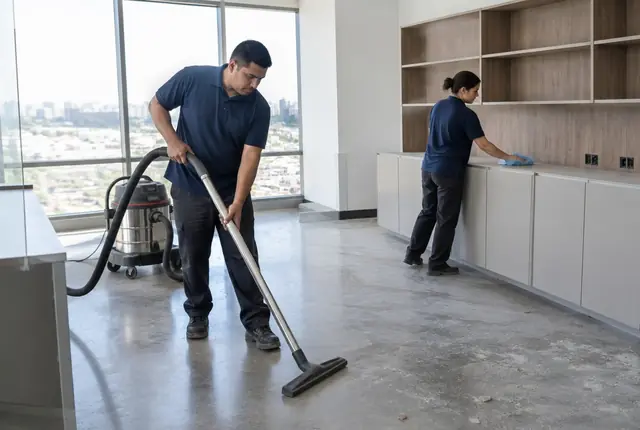
Here is what that looks like on our jobs. We HEPA vacuum first, from the top of the room down, then damp wipe. Dry dusting with a feather duster or a dry rag just moves fine dust into the air, and it lands on the floor you cleaned ten minutes ago. If you ever see a crew dry sweeping a room full of drywall dust, expect to pay for a second clean.
Rough Clean Checklist: Debris Out, Dust Down
Construction leaves a lot behind. The EPA estimated that 600 million tons of construction and demolition debris were generated in the United States in 2018, more than twice the amount of household trash. On a single job, the rough clean is where the scrap, packaging and bulk dust come out so finish work can start clean.
- Remove scrap drywall, wood offcuts, packaging, boxes and pallets
- Pull nails, screws and staples off the floor with a magnet sweep where needed
- HEPA vacuum floors, sills and ledges to pick up bulk drywall and sanding dust
- Wipe down window sills and frames so dust does not bake onto them
- Clear out tubs, showers and cabinet boxes used as storage by the trades
- Wet wipe or HEPA vacuum any area where concrete or masonry was cut
- Stage trash and recycling for the dumpster or haul-away
Too much debris for the dumpster, or no dumpster at all? Our junk removal and clean out crew can haul it as part of the same visit, so you do not need a separate hauler.
Final Clean Checklist by Area
The final clean is the big one. Everything gets cleaned top to bottom, inside and out, because fine dust gets into places no one looks until the owner opens a drawer. We work high to low and dry to wet: HEPA vacuum the high surfaces first, then damp wipe, then floors last.
Ceilings, Walls and Trim
- Dust ceiling fans, light fixtures, vents and return grilles
- HEPA vacuum the tops of door frames, cabinets and window trim
- Wipe walls for dust, scuffs and fingerprints
- Damp wipe baseboards, door frames, doors and hardware
- Wipe switch plates and outlet covers
Kitchens and Break Rooms
- Clean inside and outside of every cabinet and drawer
- Remove labels and film from appliances, then clean inside and out
- Wipe countertops and backsplash, and clean the sink and faucet
- Vacuum and wipe under and behind movable appliances where reachable
Bathrooms
- Remove stickers from toilets, sinks, tubs and shower glass
- Scrub tile and grout to lift grout haze and dust
- Clean and polish mirrors, faucets and fixtures
- Clean inside vanities and medicine cabinets
- Wipe exhaust fan covers
Windows and Glass
- Soak glass with clean water and soap to loosen dust before wiping
- Remove manufacturer labels and protective film
- Clean glass, then dry the frames, gaskets and sealants
- Vacuum and wipe window tracks and sills
- Clean glass doors and storefront glass inside and out
Floors
- HEPA vacuum all floors, including corners and edges
- Damp mop hard floors that are cleared for wet cleaning
- Vacuum new carpet to pull up loose fibers and dust
- Remove paint drips and overspray from hard floors where safe
- Note any floor that is still inside its no-wet-cleaning window
How Do You Remove Stickers, Labels and Film Without Damage?
Soak first, then work small. The Glass Association of North America's bulletin GANA 01-0300 says cleaning during construction should start by soaking glass with clean water and a soap solution, then using a mild, non-abrasive cleaner and a squeegee, with no metal parts of the equipment touching the glass.
The same bulletin is blunt about scrapers. It says using 2, 3, 4, 5 inch and larger blades to scrape a window clean "carries a large probability for causing irreparable damage to glass." When paint or construction material will not come off normally, it allows a new 1 inch razor blade on small spots of non-coated glass only, scraping in one direction, never back and forth.
Some manufacturers go further. Cardinal IG's January 2026 technical bulletin says it recommends metal blades never be used on its glass, and that its warranties do not cover glass scratching. Coated and low-E glass is the most sensitive, so check what was installed before anyone picks up a blade.
The label problem we see most is on appliances and stainless fixtures, not glass. People peel the sticker, the adhesive stays, and someone scrubs it with the rough side of a sponge. That leaves a dull patch that never matches the rest of the panel. Soften the adhesive, lift it gently, and wipe with the grain. For bigger glass jobs, especially storefronts and upper floors, our window cleaning crew handles the glass separately.
When Can New Floors Be Cleaned and Finished?
Not right away. New resilient floors need time for the adhesive to set before water touches them. Armstrong's maintenance guide for VCT with Diamond 10 coating says do not wet wash, machine scrub or strip the floor for at least five days after installation, and keep rolling loads off for at least 72 hours.
That guide also says aggressive strippers are not recommended on tile less than two years old. So the right order on a new VCT floor is: dry clean only during the final, wait out the window, then do the first scrub and polish. Armstrong's initial routine calls for sweeping, a low-speed dry buff, and two coats of commercial floor polish.
| Floor type | Before the wait is over | After |
|---|---|---|
| New VCT (per Armstrong guide) | Sweep, dust mop or vacuum only | Wet clean, scrub, then apply polish; no aggressive strippers on tile under 2 years old |
| New carpet | Vacuum loose fibers and dust | Normal vacuuming; spot clean as needed |
| Tile and stone | HEPA vacuum and damp mop once grout is cured per the installer | Scrub off grout haze, then routine care |
| Finished wood | Dry dust mop only | Follow the finish maker's cure time before rugs or wet cleaning |
For commercial buildings, the first polish coats set the tone for years of maintenance. Our commercial floor care team can schedule that first scrub and polish after the cure window. Not sure whether a new floor needs a full finish or just a buff? Our guide to strip and wax vs buff vs burnish explains the difference.
The most expensive mistake we see on new builds is a crew wet mopping or auto-scrubbing VCT the day after it goes down because the walkthrough is tomorrow. Water at the seams can loosen the bond, and that floor gets replaced on someone's dime. When the schedule is tight, we dry clean the floor for the walkthrough and come back for the wet work.
What Does the Touch-Up Clean Cover?
The touch-up clean catches what happened after the final: dust that settled out of the air and HVAC, footprints from the punch list crew, and fingerprints on glass and fixtures. It is shorter than the final clean, usually a quick pass of the whole space right before the owner walkthrough, opening day or move in.
- Dust all horizontal surfaces again: sills, ledges, counters, shelves
- Wipe fingerprints off glass, mirrors, stainless and doors
- Spot clean any punch list repairs, like new caulk or touched-up paint areas
- Vacuum and mop floors one last time
- Check vents and returns for new dust once the HVAC has been running
- Empty any trash left by the last trades
- Do a final walk with the contractor or owner
What About Lead Dust in Older Buildings?
If a remodel disturbed paint in a home, child care facility or school built before 1978, federal rules apply. Under the EPA's lead-safe renovation rule (the RRP rule), contractors doing that work must be lead-safe certified, use lead-safe work practices and finish with a cleaning check before the area is reopened.
The EPA's 2017 contractor guide describes that cleanup: clean from higher to lower, HEPA vacuum all surfaces, wipe remaining surfaces with a damp cloth, mop uncarpeted floors, then wipe floors, countertops and windowsills with disposable cloths and compare them to a cleaning verification card. Dust clearance testing by a certified lead professional is the alternative.
That cleanup and verification is the renovation contractor's responsibility. In an older Warren or Youngstown building, ask the contractor to confirm it is done before the general post construction clean begins.
How Phillips Care Does Post Construction Cleaning
We start with a free walk-through of the job, ideally before the final clean date is set. We look at square footage, how much debris is left, window count, high areas and which floors are new, so the schedule works around cure times. Then you get a written checklist for each phase and a price in writing.
We work for general contractors, builders, property managers and business owners, and we schedule around the other trades. Once the building opens, the same company can take over the recurring cleaning. If you are setting that up, our guide to what a commercial cleaning contract should include covers what to put in writing. Phillips Care Cleaning has served Trumbull and Mahoning County since 2012 and is insured and bonded. Call (330) 219-7916 or use the form below to book a walk-through.
Sources
- OSHA, 29 CFR 1926.1153, Respirable Crystalline Silica (construction), retrieved 2026-10-16
- OSHA, Silica, Crystalline: Overview, retrieved 2026-10-16
- U.S. EPA, Construction and Demolition Debris: Material-Specific Data (2018 data), retrieved 2026-10-16
- Glass Association of North America, Glass Informational Bulletin GANA 01-0300, Proper Procedures for Cleaning Architectural Glass Products (2000; copy hosted by Syracuse Glass at syracuseglass.com), retrieved 2026-10-16
- Cardinal IG, Technical Service Bulletin IG12-01/26, Glass Cleaning Recommendations (Jan 2026), retrieved 2026-10-16
- Armstrong Flooring / AHF, Maintenance Recommendations for Vinyl Composition Tile with Diamond 10 Technology, retrieved 2026-10-16
- U.S. EPA, Lead Renovation Program (RRP), retrieved 2026-10-16
- U.S. EPA, Contractors: Lead Safety During Renovations, EPA-740-F-002 (May 2017), retrieved 2026-10-16
Frequently asked questions
Post Construction Checklist questions, answered.
A free walk-through is the best way to plan your cleaning. These are the questions we hear most from Valley facility managers and owners.
What is included in a post construction cleaning checklist?
A post construction cleaning checklist covers three phases. The rough clean removes debris and bulk dust. The final clean details every surface top to bottom: fixtures, vents, cabinets inside and out, windows, tracks, labels, film and floors. The touch-up clean catches dust that settled, fingerprints and footprints right before the walkthrough or move in.
Can you dry sweep construction dust?
Not where it adds to silica exposure. OSHA's construction silica standard, 29 CFR 1926.1153, says employers shall not allow dry sweeping or dry brushing where it could contribute to exposure to respirable crystalline silica, unless wet sweeping, HEPA vacuuming or other low-exposure methods are not feasible. It also limits using compressed air to clean surfaces.
How do you remove stickers and film from new windows?
Soak the glass with clean water and a soap solution first, then use a mild, non-abrasive cleaner and a squeegee. Glass industry bulletin GANA 01-0300 warns against scraping with wide razor blades and allows only a new 1 inch blade on small spots of non-coated glass, in one direction. Some glass makers say never use metal blades.
How long should you wait to mop a new vinyl tile floor?
Armstrong's maintenance guide for VCT with Diamond 10 coating says not to wet wash, machine scrub or strip the floor for at least five days after installation, and to keep rolling loads off for at least 72 hours. Until then, sweep, dust mop or vacuum only. Check the guide for the exact product installed.
Who is responsible for lead dust cleanup after a remodel?
In homes, child care facilities and schools built before 1978, the EPA's lead-safe renovation rule (the RRP rule) requires the certified renovation firm to use lead-safe work practices and finish with a cleaning verification or dust clearance test. Ask the contractor to confirm that step is complete before the general post construction clean.
How long does a post construction clean take?
It depends on the size of the space, how much debris is left and how many phases you book. A small office suite or home remodel final clean usually takes about a day. Larger commercial spaces and new builds take longer. Phillips Care gives you a timeline in writing after a free walk-through.
Related services
More from the same crew
Post Construction Cleaning
Dust, debris, stickers and overspray gone, so the space is ready for the walkthrough and move in.
Explore serviceCommercial Floor Care
Scrubbing, stripping, waxing and burnishing on a schedule that keeps VCT, vinyl and tile floors shining.
Explore serviceWindow Cleaning
Streak-free windows, frames and sills, inside and out, for storefronts and homes.
Explore serviceRequest a free quote
One walk-through, one written price, one number to call: (330) 219-7916.
Start the conversation