
Estate Cleanout Checklist · Warren, OH
Estate Cleanout Checklist: How to Clean Out a Parent's House Step by Step
A calm, practical plan for clearing a loved one's home in the Mahoning Valley, from the first paperwork search to the last mop before the house is listed.
Request a Free Walk-ThroughCall (330) 219-7916
Every home starts with a free walk-through and a written checklist and price.
Prefer to talk it through? Call (330) 219-7916, Monday to Friday, 9 to 5.
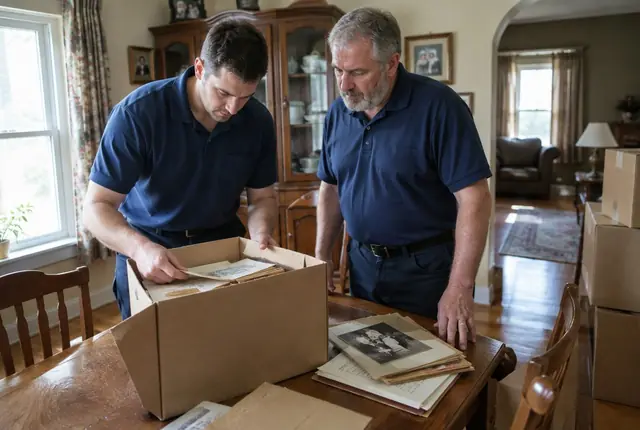
- Scope built around youA written checklist for your home, not a generic list.
- Planned service windowsNights, weekends or days, around your hours.
- Same crew every visitPeople who learn your home and its priorities.
- Local Valley routesRun from our Warren office since 2012.
An estate cleanout checklist starts with paperwork, not trash bags. Find the will, deed and financial records first, secure valuables, walk the house as a family, sort everything into keep, sell, donate or toss, dispose of hazardous items the legal way, handle utilities and mail, then deep clean the empty house before it's listed.
Clearing out a parent's home is hard work on a hard week. There are decades of belongings, siblings in different cities, and a lot of decisions that feel permanent. We've helped families across Warren, Youngstown and the rest of Trumbull and Mahoning County do this, and the ones who have the easiest time follow an order. This is that order. If you'd rather hand the heavy part off, our estate cleanout service handles the sorting help, hauling and final clean.
Where Do You Start When Cleaning Out a Deceased Parent's House?
Start by slowing down. Lock the house, change or collect keys, and agree on who is in charge, usually the executor named in the will. Then search for important papers before anyone clears a room. The FTC notes that the executor, or a court-appointed administrator if there's no will, is the person who settles the estate's debts.
That one decision, who leads, prevents most family arguments later. Everyone can help, but one person should approve what leaves the house. Here's a simple timeline most families can follow.
| When | What to do |
|---|---|
| First week | Secure the house, collect keys, find the will and key documents, keep utilities on |
| Weeks 2 to 3 | Family walk-through, each person tags what they want, valuables set aside |
| Weeks 3 to 6 | Sell, donate and give away items; schedule hazardous waste drop-off |
| Weeks 6 to 8 | Haul what's left, then deep clean the empty house |
| Before listing | Final walk-through with the realtor; cancel or transfer utilities at closing |
There's no deadline on grief, and this timeline can stretch. The point is the order, not the speed.
What Documents Should You Find First?
Find the will, the house deed, life insurance policies, bank and retirement statements, tax returns, vehicle titles and recent bills first. These papers tell the executor what the estate owns and owes, and they're often tucked in places that look like junk: shoeboxes, freezer bags, desk drawers and old envelopes.
- Will, trust documents and any letters of instruction
- Deed to the house, mortgage statements and property tax bills
- Life insurance policies and annuity paperwork
- Bank, investment and retirement account statements
- Last two or three years of tax returns
- Vehicle titles and registration
- Recent bills: utilities, credit cards, medical, phone
- Social Security, pension and Medicare paperwork
- Safe deposit box keys and the bank that holds the box
- Passwords notebook, phone and computer
- Original death certificates (order several; banks and insurers often ask for one each)
On cleanouts, we treat every paper as important until a family member says otherwise. We've found cash in coat pockets, savings bonds inside books and stock certificates in a kitchen drawer under the takeout menus. Older parents often kept money in the house. Check pockets, books, freezer containers, under drawer liners and inside lamps before anything goes in a bag.
Secure Valuables Before Anything Leaves the House
Once papers are safe, gather jewelry, cash, firearms, coins, collectibles, family photos and anything with a name on it. Put them in one locked room or take them to the executor's home, and write a simple list with photos. A shared photo album or spreadsheet keeps every sibling informed, even the ones who live out of state.
Photograph each room before you move anything. Those photos help with insurance, settle "I thought Mom said I could have that" debates, and give family members far away a way to choose items without flying in. If anyone suspects something has real value, like art, antiques or a coin collection, get it appraised before it's sold or given away.
How Should the Family Do the Walk-Through?
Pick one day when the key family members can be there in person or on a video call. Walk room by room, and let each person tag what they want with colored stickers or painter's tape with their name. Settle conflicts with a simple rule everyone agrees to first, like taking turns choosing one item at a time.
- Agree on the rules before you start: who chooses first, how ties are settled
- Give each person a sticker color or tape with their name
- Go room by room in the same order: bedrooms, living areas, kitchen, basement, garage
- Open every closet, drawer and box, even the ones that look empty
- Write down items with sentimental value but no taker, so nobody is surprised later
- Set a date for family to pick up their tagged items
The rooms that take longest are rarely the ones families expect. The kitchen and living room go fast. The basement, attic, garage and spare bedroom are where 40 years of "I'll deal with it later" lives. Plan at least half your time for those spaces, and start them early, while everyone still has energy.
How Do You Decide What to Keep, Sell, Donate or Toss?
Sort every item into one of four piles: keep, sell, donate or toss. Keep what family has tagged. Sell items with real resale value, like quality furniture, tools and collectibles. Donate usable everyday goods. Toss what's broken, stained or unsafe. Decide each item once, so you're not moving the same box three times.
| Pile | What goes in it | Where it goes |
|---|---|---|
| Keep | Items family tagged, photos, letters, heirlooms | Family members' homes or a short-term storage unit |
| Sell | Antiques, quality furniture, tools, collectibles, vehicles | Estate sale company, consignment, online listings |
| Donate | Clean clothing, linens, kitchenware, books, working furniture | Local charities, churches, shelters; ask for a receipt |
| Toss or recycle | Broken items, stained mattresses, expired food, old paperwork that's been checked | Trash, bulk pickup, junk removal, shredding |
| Special disposal | Paint, chemicals, fuel, batteries, medications | Household hazardous waste site or drug take-back (see below) |
Shred old papers with account numbers or Social Security numbers instead of throwing them in the trash. A parent's identity can still be misused after death, and bank statements in a curbside bin make it easy.
How Do You Get Rid of Hazardous Items Like Paint and Chemicals?
Take them to a household hazardous waste collection site, not the trash or the drain. The U.S. EPA says leftover paints, cleaners, oils, batteries and pesticides can catch fire, react or explode, and warns against pouring them down the drain, on the ground or into storm sewers (EPA, updated June 1, 2026).
Ohio EPA's guide, Handling Household Hazardous Waste (April 2015), adds that landfills in Ohio will not accept bulk liquid waste, so containers of gasoline and other liquids can't go in your trash. It says pesticides should never be burned, buried, mixed together or poured down the drain. The 2015 Ohio EPA guide said most homeowners had about three gallons of paint stored at home, and that paint was the largest category of waste brought to collection programs.
| Item | What to do | Source |
|---|---|---|
| Latex paint | Dry it out (brush on cardboard or mix in kitty litter), then trash the dried can | Ohio EPA |
| Oil-based paint, stains, thinners | Household hazardous waste collection | Ohio EPA, Geauga-Trumbull SWMD |
| Gasoline, kerosene, heating oil | Hazardous waste site; never the trash or ground | Ohio EPA |
| Pesticides and lawn chemicals | Hazardous waste collection in the original container | Ohio EPA |
| Used motor oil | Auto parts stores or oil collection centers | Ohio EPA |
| Unused medications | Drug take-back first; FDA flush list or sealed trash as a fallback | FDA |
For Trumbull County residents, the Geauga-Trumbull Solid Waste Management District runs the Trumbull County Collection Facility at 5138 Enterprise Dr. NW in Warren. Its site says the facility is open Wednesdays, 10 a.m. to 3 p.m., takes batteries, propane tanks and fluorescent bulbs year-round, and takes flammable items like gasoline, pesticides and oil-based paint May through October. Call 330-675-2673 to confirm before you load the car. Mahoning County families should check with their own county solid waste district.
For prescriptions, the FDA says to use a take-back option first. If none is available and the drug isn't on the FDA flush list, mix it with dirt, cat litter or used coffee grounds, seal it in a plastic bag, put it in the trash, and scratch out the personal information on the bottle label.
Utilities, Mail and Accounts to Handle
Keep the power, water and heat on until the cleanout and final clean are done. Crews and cleaners need lights and running water, and in a Valley winter an unheated empty house can freeze pipes. Call the homeowners insurance company too, since coverage can change when a house sits empty.
- Keep electric, water, gas and trash service on until the house is cleaned
- Set the thermostat high enough in winter to protect the pipes
- Tell the homeowners insurer the house is unoccupied and ask what that changes
- Cancel cable, internet, phone, newspaper and subscriptions
- Forward mail to the executor so no bill or statement gets missed
- Notify banks, credit card companies and the three credit bureaus
- Transfer or close utilities at the house sale closing
On debts, the FTC says family members usually don't have to pay a deceased relative's debts from their own money, with exceptions such as cosigned debts (FTC, February 2023). Debts are paid from the estate by the executor or administrator, so don't pay a collector from your own account just to make the calls stop.
Do You Need Probate Before Cleaning Out the House in Ohio?
Often the executor or administrator needs authority from the county probate court before selling the house or major assets. For smaller estates, Ohio Revised Code 2113.03 allows a simpler release from administration when the estate's assets are $35,000 or less, or $100,000 or less when everything passes to a surviving spouse.
Those limits are in the statute as it reads today, effective January 13, 2012. Every estate is different, so check with the probate court in the county where your parent lived, or with an attorney, before selling anything of real value. Family can usually start sorting and cleaning while the paperwork moves, as long as the executor approves what leaves the house.
How Much Does an Estate Cleanout Cost?
HomeAdvisor's estate clean-out cost guide, updated June 20, 2026, puts the average at $1,250, with a normal range of $275 to $4,000. It says price depends on how many items there are and how they need to be handled, not on square footage. Full houses with basements, garages and outbuildings land at the high end.
You can lower the cost by doing the family sorting first and selling or donating what you can, so the crew hauls less. For a breakdown of how hauling is priced, see our guide on how much junk removal costs. If it's mostly hauling with little sorting, our junk removal and clean-out service may be the better fit.
Final Cleaning Before Listing the House
Once the house is empty, clean it top to bottom. An empty house shows every cobweb, carpet stain and dusty baseboard, and buyers notice. The final clean is also when you find what the cleanout missed, like the box on the top closet shelf or the tools behind the furnace.
- Dust ceiling fans, light fixtures and the tops of door frames
- Wipe walls, switches, outlet covers, doors and baseboards
- Clean inside every cabinet, drawer and closet
- Clean inside the oven, fridge, microwave and dishwasher, or confirm they're being removed
- Scrub tubs, showers, toilets, sinks and grout
- Wash windows, sills and tracks
- Clean carpet and air out lingering odors
- Sweep the basement and garage
- Mop hard floors last, room by room, working toward the door
A home a parent lived in for decades often carries odors in the carpet, curtains and closets that the family stopped noticing years ago. After the furniture is out, open the windows for a day before the deep clean. Then decide on carpet cleaning once the house is empty, since you'll see the real condition of the floors for the first time. Our move out cleaning checklist covers the room-by-room details, and our house cleaning service can handle the final clean on its own.
How Phillips Care Handles Estate Cleanouts
Fernando Phillips started Phillips Care Cleaning in Warren in 2012, after more than 15 years in property care. We're insured and bonded, and we work days, nights and weekends, so family members coming in from out of town can be there for the parts that matter. We start with a free walk-through of the house, then give you a written checklist and quote. We work around what the family has tagged, set papers and valuables aside, haul the rest and leave the house clean and ready for the realtor. The same crew stays on the job, and the owner takes the call if you have a question.
Call (330) 219-7916 or request a free walk-through on our estate cleanouts page. We serve Warren, Youngstown and all of Trumbull and Mahoning County.
Sources
- U.S. Environmental Protection Agency, Household Hazardous Waste (HHW) (updated June 1, 2026), retrieved 2026-10-16
- Ohio EPA, Handling Household Hazardous Waste (April 2015), retrieved 2026-10-16
- Geauga-Trumbull Solid Waste Management District, Trumbull County Collection Facility hours and accepted items, retrieved 2026-10-16
- U.S. Food and Drug Administration, Disposal of Unused Medicines: What You Should Know (current as of Oct 31, 2024), retrieved 2026-10-16
- Ohio Revised Code, Section 2113.03, Release from administration (effective Jan 13, 2012), retrieved 2026-10-16
- Federal Trade Commission, Debts and Deceased Relatives (February 2023), retrieved 2026-10-16
- HomeAdvisor, How Much Does an Estate Clean-Out Cost? (updated June 20, 2026), retrieved 2026-10-16
Frequently asked questions
Estate Cleanout Checklist questions, answered.
A free walk-through is the best way to plan your cleaning. These are the questions we hear most from Valley homeowners.
How long does it take to clean out a deceased parent's house?
Most families need several weeks to two months, depending on the size of the house and how much was stored. The family walk-through and sorting take the most time, especially the basement, attic and garage. Once the family has taken what they want, a professional crew can usually haul and clean the rest in a day or two for an average home.
What should you not throw away when cleaning out a parent's house?
Don't throw away any paperwork until it's been checked: wills, deeds, insurance policies, bank and retirement statements, tax returns, titles and recent bills. Also keep photos, letters and anything with a family name on it. Check pockets, books, freezer containers and drawers for cash, bonds or jewelry before anything goes in a trash bag.
Can I clean out my parent's house before probate in Ohio?
Family can often sort and clean while probate paperwork moves, but the executor or administrator should approve what leaves the house, and selling the home or valuable items usually needs court authority. Ohio Revised Code 2113.03 offers a simpler release from administration for estates of $35,000 or less, or $100,000 when all assets pass to a surviving spouse. Check with the county probate court or an attorney.
How do I dispose of old paint and chemicals from an estate?
Take oil-based paint, gasoline, pesticides and other chemicals to a household hazardous waste collection site. The U.S. EPA warns against pouring these products down the drain or on the ground, and Ohio EPA says Ohio landfills won't accept bulk liquids. Latex paint can be dried out with kitty litter and thrown away. In Trumbull County, the Geauga-Trumbull district runs a drop-off site in Warren.
How much does an estate cleanout cost?
HomeAdvisor's guide, updated June 20, 2026, puts the average estate clean-out at $1,250, with most people paying between $275 and $4,000. The price depends on how many items need to be hauled and how they must be handled. Sorting, selling and donating first lowers the cost, since the crew hauls less.
Are you responsible for your parent's debts after they die?
Usually not from your own money. The FTC says family members typically don't have to pay a deceased relative's debts personally, though there are exceptions, such as a debt you cosigned. Debts are paid out of the estate by the executor or administrator. Only certain people, like the executor or a spouse, can discuss the debt with collectors.
Related services
More from the same crew
Estate Cleanouts
Whole house, basement, garage and foreclosure clean outs, hauled and cleaned so the property is ready.
Explore serviceJunk Removal & Clean Outs
Furniture, appliances and junk hauled away from basements, garages and rentals, then swept clean.
Explore serviceHouse Cleaning
Regular and deep cleaning for homes and apartments, room by room, by the same crew every visit.
Explore serviceRequest a free quote
One walk-through, one written price, one number to call: (330) 219-7916.
Start the conversation