
How to Clean a Mattress · Warren, OH
How to Clean a Mattress (Stains, Odors and Dust Mites)
The step-by-step method for vacuuming, spot treating each type of stain, deodorizing and drying a mattress without hurting the foam or the warranty.
Request a Free Walk-ThroughCall (330) 219-7916
Every home starts with a free walk-through and a written checklist and price.
Prefer to talk it through? Call (330) 219-7916, Monday to Friday, 9 to 5.
- Scope built around youA written checklist for your home, not a generic list.
- Planned service windowsNights, weekends or days, around your hours.
- Same crew every visitPeople who learn your home and its priorities.
- Local Valley routesRun from our Warren office since 2012.
To clean a mattress, strip the bed, vacuum the whole surface and seams, spot treat stains with the right cleaner for each one, cover it with baking soda to pull out odors, vacuum again and let it dry completely before you make the bed. Consumer Reports suggests doing this at least twice a year, and four times a year if you do not use a mattress encasement.
A mattress collects sweat, skin flakes, spills and the occasional accident every single night, and unlike your sheets, it never goes in the washer. The good news is that most of the work is dry work. Water is where people get into trouble, because a soaked mattress dries slowly and can start to smell worse than when you began. Below is the method our crews use on mattresses in homes around Warren and Youngstown, scaled down for a homeowner. If you would rather hand it off, our upholstery cleaning service covers mattresses too.
What Do You Need to Clean a Mattress?
You need a vacuum with an upholstery attachment and a crevice tool, a box of baking soda, white cloths, cold water, mild dish soap and an enzyme cleaner. The Sleep Foundation lists cold water, baking soda, rags, a gentle bleach-free detergent and dish soap or enzyme cleaner as the basic kit. Plan on a full day so the mattress can air out.
- Vacuum with an upholstery attachment and a crevice tool
- One box of baking soda (a full pound for a queen or king)
- Several clean white cloths or microfiber towels
- Cold water in a spray bottle or bowl
- Mild dish soap
- An enzyme cleaner for blood, sweat, urine and vomit
- 3% hydrogen peroxide for blood and wine on light-colored covers
- A fan, and a room you can open up for airflow
How to Clean a Mattress, Step by Step
This is the order that works on almost every mattress, from innerspring to memory foam. Do the dry steps first, the wet steps only where you need them, and the drying step for as long as it takes. Skipping ahead to the spray bottle is the most common mistake we see.
- Strip and wash the bedding. Pull off sheets, pillowcases, the mattress pad and any protector. AAFA recommends washing sheets and blankets weekly in water that is at least 130°F to kill dust mites. Check the care labels first.
- Vacuum the whole mattress. Consumer Reports says to go over the entire surface with the upholstery attachment, then switch to the crevice tool for the seams, where dust and dead skin build up. Its testing found a regular vacuum works fine, so you do not need a special mattress vacuum.
- Spot treat stains. Work stain by stain using the table below. Put the cleaner on a cloth, never straight on the mattress, and blot instead of rubbing.
- Blot out the cleaner. Follow with a cloth dampened in cold water, then press with a dry cloth to lift as much moisture as you can.
- Deodorize with baking soda. Once the treated spots are dry, sprinkle baking soda over the whole top. Consumer Reports says you can leave it for up to 24 hours.
- Vacuum the baking soda off. Consumer Reports notes that fine powder can damage some vacuums, so check your manual and wipe up as much as you can by hand first.
- Flip or rotate and repeat. If your mattress is two-sided, do the other side. If it is one-sided, rotate it head to foot.
- Let it dry completely. Run a fan, open a window and wait until the treated spots are dry all the way through before you put the bedding back.
A tip from the field: vacuum the seams and the edge piping slowly, in short strokes, and do it twice. On a mattress that is a few years old, that is where most of the fine gray dust comes out, and a fast pass across the top barely touches it.
How Do You Remove Mattress Stains by Type?
Treat each stain with the cleaner that breaks it down. The Sleep Foundation says a commercial enzyme cleaner is typically the best option for blood, sweat, urine and other biological stains. Consumer Reports recommends a mild dish soap mix of 1 teaspoon in 1 cup of warm water for dirt and grass. Always test any cleaner on a hidden spot first.
| Stain | What to use | What to avoid |
|---|---|---|
| Blood | Cold water blot, then a little hydrogen peroxide on a fresh part of the cloth, then enzyme cleaner (Consumer Reports) | Hot water, which Consumer Reports says can set the stain |
| Urine | Blot, then dab with a cloth dampened in enzyme cleaner, then blot dry (Consumer Reports) | Oversaturating the spot, which spreads it into the foam |
| Sweat and body oil yellowing | Enzyme cleaner, or dish soap suds only (Sleep Foundation) | Bleach (the Sleep Foundation calls for a bleach-free detergent) |
| Vomit | Remove solids, cover with baking soda for 10 minutes, vacuum, then dab with enzyme cleaner (Consumer Reports) | Scrubbing before the solids are gone |
| Red wine | Cold water blot, then one part dish soap to two parts hydrogen peroxide if needed (Consumer Reports) | Rubbing, which pushes the color deeper |
| Dirt, grass, coffee | 1 teaspoon mild dish soap in 1 cup warm water, blotted on with a cloth (Consumer Reports) | Pouring liquid straight on the mattress |
Hydrogen peroxide is a bleaching agent, so keep it to white or light covers and test it first. For a mattress that has had a pet accident or a potty-training accident more than once, the odor is usually deeper than the visible stain. Our guide on how to get pet urine out of carpet explains why enzyme cleaners work on urine and why regular soap often does not.
Old stains come up in layers. If a yellow ring fades after one round, let it dry fully before you try a second round instead of hitting it again while it is wet. Working a wet spot over and over just drives the moisture down into the foam, and the ring often comes back bigger as it dries.
How Do You Get Odors Out of a Mattress?
Baking soda is the main tool. Consumer Reports' method is to cover the whole mattress, using as much as a full one-pound box, and let it sit for up to 24 hours before vacuuming. Odors that come back after that usually mean something soaked in below the surface, such as urine or a spill that never dried.
Airflow helps too. Open windows, run a fan and keep the bedroom door open while the baking soda sits. If you can, put the mattress where sunlight hits it. Skip scented sprays as a fix. They cover a smell for a day, and the moisture they add can make the real problem worse.
How Long Does a Mattress Take to Dry?
A spot-treated mattress usually needs several hours to dry, and a heavily treated area can take most of a day. Consumer Reports warns the surface can feel dry while the area underneath is still damp. The EPA says that when damp materials are dried within 24 to 48 hours, in most cases mold will not grow.
That 24 to 48 hour window is the rule we work by. A mattress is thick, porous and sits in a closed bedroom, which is a slow place for anything to dry. The Sleep Foundation adds that memory foam is not designed to get wet, so use even less liquid on a foam mattress than on an innerspring.
- Use a damp cloth, never a soaked one
- Press a dry towel on every treated spot until it comes up dry
- Run a fan across the mattress and open a window
- Keep indoor humidity below 60 percent, ideally 30 to 50 percent (EPA)
- Feel the spot with the back of your hand and press down; cool means still damp
- Do not put the protector or sheets back until it is dry all the way through
Can Cleaning a Mattress Void the Warranty?
It can, so read your warranty before you start. Tempur-Pedic's 25-year mattress warranty says the company may invalidate coverage "if the mattress is found to be in an unsanitary condition," and it does not cover "burns, cuts, tears, or liquid damage." Stains are often what a warranty inspector looks at first.
A few habits protect you. Keep the law tag attached, since many brands ask to see it on a claim. Follow the use and care sheet that came with the mattress, because some brands tell you which cleaners and how much moisture are allowed. And put a waterproof mattress protector on as soon as the mattress is clean. A protector is far easier to wash than any stain is to remove.
If a mattress is still under warranty and you notice sagging, photograph and file the claim before you scrub old stains. Heavy cleaning can leave water rings that look worse than the original stain, and you want the inspector to see the sag, not a fresh tide line.
How Do You Get Rid of Dust Mites in a Mattress?
You cannot vacuum dust mites away, but you can cut their numbers. ACAAI says dust mites feed on the skin flakes people shed every day and die when humidity falls below 50 percent. AAFA says your bedroom usually has more dust mites than anywhere else in your home, and recommends zippered allergen covers for mattresses and pillows.
ACAAI is clear that "vacuuming and dusting are not enough to remove dust mites." The steps that make a real difference work together:
- Put a zippered allergen-barrier encasement on the mattress and pillows (AAFA, ACAAI)
- Wash sheets and blankets every week in hot water (AAFA says at least 130°F; ACAAI says hot water up to 120°F, so check your water heater and care labels)
- Keep bedroom humidity below 50 percent with a dehumidifier or air conditioning (ACAAI)
- Vacuum the mattress and the bedroom carpet regularly
- Wash or replace pillows that cannot be encased
Carpet in the bedroom is part of the same problem, since mites and the skin they eat settle there too. A deep carpet cleaning in the bedroom pairs well with a mattress clean if anyone in the house has allergies.
A Simple Mattress Care Schedule
Most of keeping a mattress clean happens between deep cleans. The schedule below is built from Consumer Reports, the Sleep Foundation and AAFA guidance. If you already follow our deep cleaning checklist, add the twice-a-year mattress clean to the bedroom section.
| How often | Task | Source |
|---|---|---|
| Right away | Blot spills and accidents before they set | Sleep Foundation |
| Weekly | Wash sheets and pillowcases in hot water | AAFA, Sleep Foundation |
| Monthly | Wash the mattress protector and vacuum the mattress top | Our crew recommendation |
| Every 3 to 6 months | Rotate the mattress head to foot | Our crew recommendation |
| Twice a year (four times without an encasement) | Full clean: vacuum, spot treat, baking soda, dry | Consumer Reports |
When Professional Hot Water Extraction Makes Sense
Home methods handle surface dirt, light stains and everyday odor. A professional clean is worth it when a stain or smell keeps coming back, when there has been a repeat pet or child accident, when someone in the house has allergies, or when you are preparing a guest room or a rental between occupants.
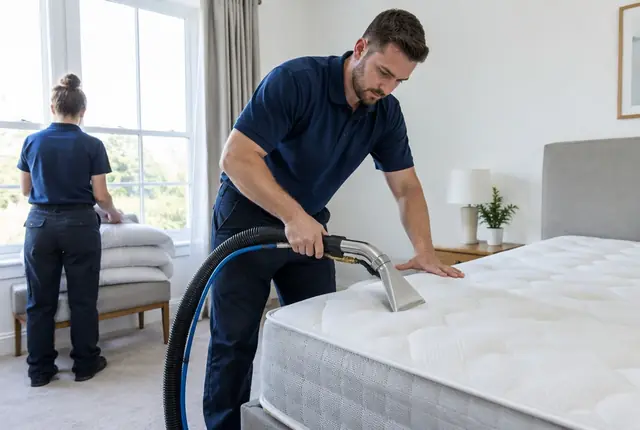
Hot water extraction rinses the fabric and pulls the dirty water back out with strong suction in the same pass. That suction is the part a spray bottle and towel cannot copy. On a mattress, the trick is controlling the moisture: light passes, a lot of vacuum, and good airflow afterward, so the mattress is dry within that EPA 24 to 48 hour window instead of soaking up water. If a mattress is torn, sagging badly or has mold, cleaning is not the answer. Our junk removal crew can haul the old one away.
How Phillips Care Cleans Mattresses
We clean mattresses as part of our upholstery cleaning work, often on the same visit as couches, chairs or bedroom carpet. We start with a look at the mattress and the stains, tell you what is likely to come out and what is not, and work with as little water as the job allows so the mattress is ready for bed that night or the next day.
Phillips Care Cleaning has served Trumbull and Mahoning County since 2012. We are insured and bonded, you get a written quote before we start, and the owner takes the call. Want the whole house done while we are there? See our house cleaning service, call (330) 219-7916, or request a free quote.
Sources
- Consumer Reports, How to Clean a Mattress (and Why), retrieved 2026-10-16
- Consumer Reports, How to Get Stains Out of Your Mattress, retrieved 2026-10-16
- Sleep Foundation, How to Clean a Mattress, retrieved 2026-10-16
- U.S. EPA, A Brief Guide to Mold, Moisture and Your Home, retrieved 2026-10-16
- American College of Allergy, Asthma and Immunology (ACAAI), Dust Allergy, retrieved 2026-10-16
- Asthma and Allergy Foundation of America (AAFA), Dust Mite Allergy, retrieved 2026-10-16
- Tempur-Pedic, Mattress: 25 Year Limited Warranty, retrieved 2026-10-16
Frequently asked questions
How to Clean a Mattress questions, answered.
A free walk-through is the best way to plan your cleaning. These are the questions we hear most from Valley homeowners.
How do you deep clean a mattress at home?
Strip and wash the bedding, vacuum the whole mattress with an upholstery attachment and the seams with a crevice tool, spot treat stains with an enzyme cleaner or mild dish soap on a cloth, then cover the mattress with baking soda for up to 24 hours. Vacuum it off, flip or rotate the mattress, and let it dry completely before you make the bed.
How often should you clean a mattress?
Consumer Reports says to clean a mattress at least twice a year, or four times a year if you do not use a mattress encasement. The Sleep Foundation suggests about every six months. Between deep cleans, wash your sheets weekly, wash the protector monthly and blot any spill right away so it does not set.
What is the best cleaner for mattress stains?
For blood, sweat, urine and vomit, the Sleep Foundation says a commercial enzyme cleaner is typically the best option. Consumer Reports adds cold water and hydrogen peroxide for blood, and a mix of 1 teaspoon mild dish soap in 1 cup of warm water for dirt and grass. Test any cleaner on a hidden spot first and apply it with a cloth.
Does baking soda really clean a mattress?
Baking soda deodorizes, it does not remove stains. Consumer Reports recommends covering the whole mattress, using as much as a one-pound box, and leaving it for up to 24 hours before vacuuming. Wipe up as much as you can by hand first, because fine powder can damage some vacuums. Treat stains before the baking soda step.
Can you get a mattress wet?
Only a little. Use a damp cloth, never pour liquid on the mattress, and blot it dry. The Sleep Foundation says memory foam is not designed to get wet. The EPA says damp materials dried within 24 to 48 hours usually will not grow mold, so run a fan and wait until the spot is dry all the way through.
How do you kill dust mites in a mattress?
Vacuuming alone does not remove dust mites, according to ACAAI. Use a zippered allergen-barrier encasement on the mattress and pillows, wash bedding weekly in hot water and keep bedroom humidity below 50 percent, the level at which ACAAI says dust mites die. These steps work best together, and vacuuming the bedroom carpet helps too.
Related services
More from the same crew
Upholstery Cleaning
Couches, sofas, chairs and mattresses deep cleaned in your home, stains and odors pulled out.
Explore serviceCarpet Cleaning
Deep carpet cleaning that lifts traffic lanes, pet stains and odors from the carpet in your home.
Explore serviceHouse Cleaning
Regular and deep cleaning for homes and apartments, room by room, by the same crew every visit.
Explore serviceRequest a free quote
One walk-through, one written price, one number to call: (330) 219-7916.
Start the conversation