
Spring Cleaning Checklist · Warren, OH
Spring Cleaning Checklist for Ohio Homes: Inside, Outside and Everything Winter Left Behind
A room by room and outside the house checklist built for Northeast Ohio, where spring means cleaning up after months of salt, slush and closed windows.
Request a Free Walk-ThroughCall (330) 219-7916
Every home starts with a free walk-through and a written checklist and price.
Prefer to talk it through? Call (330) 219-7916, Monday to Friday, 9 to 5.
- Scope built around youA written checklist for your home, not a generic list.
- Planned service windowsNights, weekends or days, around your hours.
- Same crew every visitPeople who learn your home and its priorities.
- Local Valley routesRun from our Warren office since 2012.
A spring cleaning checklist covers the deep cleaning jobs you skip all winter: inside appliances, baseboards, vents, windows, carpets and closets, plus the outside of the house. In Ohio that outside list matters most. Clear the gutters, wash windows and screens, rinse siding, and get road salt off the driveway and walks. Then swap the HVAC filter, test smoke alarms and prep for pollen.
Most people do some version of this every year. The American Cleaning Institute's 2026 spring cleaning survey, run by Wakefield Research and released March 3, 2026, found that 80% of Americans plan to spring clean, with decluttering and organizing the top reason at 57%. Below is the checklist our crews use on homes across Warren, Youngstown and the rest of Trumbull and Mahoning County. Use it yourself, or hand any part of it to our house cleaning team.
What Should Be on a Spring Cleaning Checklist?
A complete spring cleaning checklist has five parts: the inside of the house room by room, the outside of the house, the heating and cooling system, safety checks like smoke alarms, and allergy prep. Most checklists online stop at the inside. In Northeast Ohio, the outside and the salt cleanup are half the job.
| Area | What it covers | Why spring |
|---|---|---|
| Inside, room by room | Appliances, cabinets, baseboards, vents, fixtures, closets, floors and carpet | Months of closed windows and tracked-in slush leave dust and grime behind |
| Outside | Gutters, windows and screens, siding, driveway, walks and porch | Winter leaves debris in gutters and salt film on concrete and lower siding |
| HVAC | Filter swap, vent and return covers, area around the furnace | The system switches from heating to cooling |
| Safety | Smoke alarms, carbon monoxide alarms, dryer lint area | An easy yearly reminder for tests and battery changes |
| Allergy prep | Bedding, window tracks, entry mats, pet areas | Tree pollen season starts in spring |
Where Should You Start Spring Cleaning?
Start by decluttering, then clean top to bottom and dry to wet in every room. Dust ceiling fans, light fixtures and vents first, then wipe walls, windows and furniture, and finish with floors. Outside, follow the same rule: gutters first, then windows, then siding, then the driveway and walks last.
That order keeps you from cleaning anything twice. Dust falls, rinse water runs down, and anything that lands below hits a surface you have not cleaned yet. If you want the full inside order with time estimates, our deep cleaning checklist walks through it step by step.
The mistake we see most often is washing windows first because they look the worst. Then the gutters get cleaned, and the muck that splashes out lands right back on the fresh glass. On our jobs, gutters always come before windows, and the driveway is always the last thing we rinse, because everything above it drains onto it.
Spring Cleaning Checklist: Inside the House, Room by Room
These are the jobs that go past a normal weekly clean.
Kitchen
- Empty and wipe out the refrigerator and freezer, including shelves, drawers and door seals
- Clean inside the oven, microwave and dishwasher filter
- Wipe cabinet fronts, handles and the tops of cabinets
- Degrease the range hood and filter
- Clean the backsplash, faucet base and sink drain
- Pull out the trash can and clean the bin and the floor under it
- Toss expired pantry and spice items
Bathrooms
- Scrub soap scum from the tub, shower walls and glass door tracks
- Clean grout and caulk lines
- Wipe the exhaust fan cover and vacuum the fan
- Clean behind and around the base of the toilet
- Wash or replace the shower curtain and liner
- Clear out expired medicine and old products under the sink
Bedrooms and Closets
- Wash all bedding, including mattress pad, pillows and comforters
- Vacuum the mattress and flip or rotate it
- Swap winter clothes for spring clothes and donate what you did not wear
- Dust closet shelves and vacuum the closet floor
- Vacuum under the bed and dressers
Living Areas
- Dust ceiling fans, light fixtures and the tops of door frames
- Wash or vacuum curtains and wipe blinds slat by slat
- Vacuum upholstered furniture, under cushions and underneath
- Wipe light switches, door handles, remotes and baseboards
- Clean inside window tracks and sills
Floors and Carpet
- Vacuum carpet slowly in two directions, especially near entry doors
- Deep clean carpet and rugs that took the winter traffic
- Clean hard floors along the edges and in corners, not just the open middle
- Wash or replace entry mats at every door
After an Ohio winter, the carpet right inside the front and garage doors usually has a white, crusty haze. That is dried salt and slush tracked in on boots. Vacuuming alone will not lift it. It needs a proper hot water extraction, and the sooner it comes out, the less it wears the fibers. That is one of the most common spring calls we get for carpet cleaning.
What Outside Jobs Belong on an Ohio Spring Cleaning Checklist?
An Ohio spring cleaning checklist should include clearing the gutters and downspouts, washing windows and screens, rinsing mildew and road grime off the siding, and cleaning salt residue off the driveway, sidewalks, steps and porch. Do them top to bottom so dirty water from one job never lands on another you already finished.
Gutters and Downspouts
Winter storms leave leaves, seed pods, shingle grit and sticks in the gutters. The EPA's guide to mold, moisture and your home tells homeowners to "clean and repair roof gutters regularly" and to make sure the ground slopes away from the foundation, because standing and overflowing water is how moisture gets into a house. Spring is the first good chance to do it once the ice is gone. For a full schedule, see how often gutters should be cleaned, or let our gutter cleaning crew handle the ladder work.
- Scoop debris out of every gutter run
- Flush each downspout and check that water comes out the bottom
- Check that downspout extensions send water away from the foundation
- Look for sagging sections, loose hangers and leaking seams
Windows and Screens
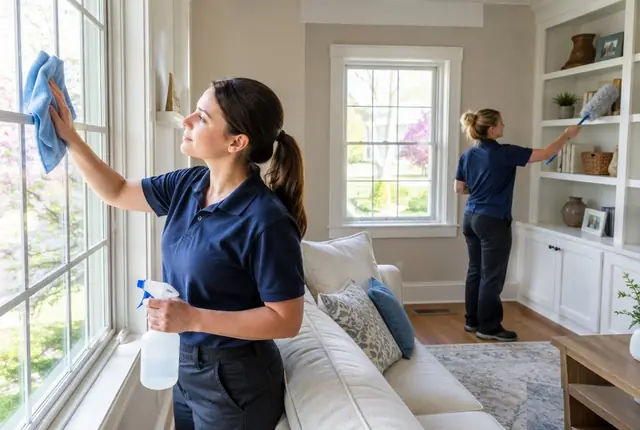
Windows on an Ohio house spend the winter collecting road film, salt spray from passing plows and hard water spots. Spring is when you can finally open them, so clean both sides of the glass, the tracks and the screens before the pollen comes in.
- Remove screens and wash them with mild soap and a soft brush
- Wash glass inside and out
- Vacuum and wipe window tracks and weep holes
- Wipe sills and frames, checking for peeling caulk
Siding, Porch and Deck
- Rinse siding to remove green mildew on the north side and grime near the ground
- Clean porch ceilings, light fixtures and the front door
- Sweep and wash the porch, steps and railings
- Clean outdoor furniture before it goes back out
Clearing Winter Salt Off Driveways, Walks and Siding
Ohio uses a lot of salt. In the winter of 2024 to 2025, Ohio DOT crews spread about 769,177 tons of salt and 16.4 million gallons of liquid deicer across the state, as reported in the AASHTO Journal in October 2025. Add what cities, plow contractors and homeowners put down, and every driveway and front walk spends the winter coated in it.
Salt left on concrete keeps working after the snow melts. Each freeze and thaw draws salty water into the surface, which is how the pitting and flaking called scaling happens. Spring is the time to rinse it off, along with the white film on the bottom of the garage door and the lowest rows of siding.
- Sweep up leftover salt and grit before you wet anything
- Rinse or pressure wash the driveway, sidewalk, steps and garage floor
- Rinse the lower siding, garage door and foundation near the drive
- Clean salt off door thresholds and the bottom of storm doors
- Note any cracks or flaking concrete to repair before next winter
One thing we tell homeowners: sweep first. Spraying a driveway that still has loose salt and cinders on it just pushes the salty slurry into the lawn edge and the cracks. Dry sweep, then wash, and the grass along the drive comes back greener. Our pressure washing service handles driveways, walks and siding in one visit.
When Should You Change the HVAC Filter in Spring?
Change the HVAC filter when the system switches from heating to cooling, then check it every month or two through the cooling season. The U.S. Department of Energy says replacing a dirty, clogged filter with a clean one can lower an air conditioner's energy use by 5% to 15%, and homes with pets or dust need it more often.
A clogged filter also lets dirt bypass it and coat the cooling coil, according to the same energy.gov guidance. While you are at it, vacuum the supply vent covers and the return grille, and clear storage boxes away from the furnace so air can move.
How Often Should You Test Smoke Alarms?
Test every smoke alarm once a month and replace the batteries at least once a year, according to the U.S. Fire Administration. Replace the whole alarm every 10 years, or on the maker's schedule for sealed 10 year alarms. Spring cleaning is a good yearly reminder to do the battery change and check the dates.
This one matters more than anything else on the list. In its January 2019 Smoke Alarms in U.S. Home Fires report, the National Fire Protection Association found that almost three out of five home fire deaths from 2012 to 2016 happened in homes with no smoke alarms or with alarms that did not work. The USFA puts it plainly: "A smoke alarm with a dead or missing battery is the same as having no smoke alarm at all."
- Press the test button on every alarm on every floor
- Replace 9 volt and backup batteries
- Check the date on the back and replace any alarm 10 years or older
- Gently vacuum dust out of alarm vents
- Test carbon monoxide alarms at the same time
Do the same safety pass on the dryer. The USFA's report on residential dryer fires found failure to clean was the leading factor, at 34%, in 2008 to 2010 data. Clean the lint screen slot and behind the dryer while you are spring cleaning the laundry room.
How Do You Spring Clean for Allergy Season?
To spring clean for allergies, focus on what holds pollen and dust: bedding, carpet, upholstery, window tracks and entry areas. The Asthma and Allergy Foundation of America recommends keeping windows and doors closed during peak pollen times, washing bedding weekly in hot water, and removing shoes before coming inside.
Seasonal allergies are common. AAFA reports that more than 82 million people in the U.S. were diagnosed with seasonal allergic rhinitis in 2024, and that tree pollen is the main spring trigger.
- Wash all bedding in hot water, then keep washing it weekly through pollen season
- Vacuum carpet, rugs and upholstered furniture, using a vacuum with a good filter
- Wipe window sills and tracks, where pollen collects
- Set up a shoe spot and mat at each entry door
- Wipe down pets before they come inside on high pollen days
- Swap in a fresh HVAC filter
Printable Spring Cleaning Checklist
Here is the whole list on one page. Print it or screenshot it, and work through it over a few weekends instead of trying to do it all at once.
| Area | Task | Done |
|---|---|---|
| Kitchen | Fridge, oven, microwave, range hood, cabinet tops, under the sink | ☐ |
| Bathrooms | Soap scum, grout, exhaust fan, behind toilet, shower curtain | ☐ |
| Bedrooms | All bedding, mattress, closets, under beds | ☐ |
| Living areas | Fans, fixtures, blinds, curtains, upholstery, baseboards | ☐ |
| Floors | Deep clean carpet and rugs, hard floor edges, entry mats | ☐ |
| Gutters | Clear gutters, flush downspouts, check extensions | ☐ |
| Windows | Glass inside and out, screens, tracks, sills | ☐ |
| Siding and porch | Rinse siding, porch, steps, railings, outdoor furniture | ☐ |
| Driveway and walks | Sweep, then wash off winter salt; rinse garage door and lower siding | ☐ |
| HVAC | New filter, vacuum vents and returns, clear space around furnace | ☐ |
| Safety | Test smoke and CO alarms, change batteries, check alarm dates, clean dryer lint area | ☐ |
| Allergy prep | Hot water bedding, window tracks, shoe spot at each door | ☐ |
When to Call a Pro for Spring Cleaning
Most of this list is doable on your own. The jobs people usually hand off are the ones that need ladders, equipment or a full day: second story windows, gutters, pressure washing, carpet extraction and a top to bottom deep clean of the inside.
Phillips Care Cleaning has served homes in Warren and across Trumbull and Mahoning County since 2012. We are insured and bonded, and because we do house cleaning, windows, gutters, pressure washing and carpet, one call can cover the whole spring list in the right order. Start with a free walk-through and a written checklist and quote. Call (330) 219-7916 and the owner takes the call.
Sources
- American Cleaning Institute via Business Wire, Cleaning Secrets Revealed: 40% of Americans Embarrassed to Admit Last Time They Cleaned Their Toilet (Wakefield Research, Mar 3, 2026), retrieved 2026-10-16
- AASHTO Journal, State DOTs Making Preparations for Winter Operations (Oct 10, 2025), retrieved 2026-10-16
- U.S. Environmental Protection Agency, A Brief Guide to Mold, Moisture and Your Home, retrieved 2026-10-16
- U.S. Department of Energy, Energy Saver, Air Conditioner Maintenance, retrieved 2026-10-16
- U.S. Fire Administration, Smoke Alarms, retrieved 2026-10-16
- National Fire Protection Association, Smoke Alarms in U.S. Home Fires (Ahrens, Jan 2019, 2012 to 2016 data), retrieved 2026-10-16
- U.S. Fire Administration, Clothes Dryer Fires in Residential Buildings, 2008-2010 (Topical Fire Report, Aug 2012), retrieved 2026-10-16
- Asthma and Allergy Foundation of America, Allergy Facts and Figures (2024 data), retrieved 2026-10-16
- Asthma and Allergy Foundation of America, Spring allergy tips press release (Mar 29, 2022), retrieved 2026-10-16
Frequently asked questions
Spring Cleaning Checklist questions, answered.
A free walk-through is the best way to plan your cleaning. These are the questions we hear most from Valley homeowners.
What is the first thing to do when spring cleaning?
Declutter first. Clear counters, floors, closets and surfaces so you are cleaning the house, not moving piles around. Then clean each room top to bottom and dry to wet: ceiling fans and fixtures first, then walls, windows and furniture, and floors last. Outside, start with the gutters and finish with the driveway, since everything above drains onto it.
How long does spring cleaning take?
For most homes, a full spring clean takes several days of work spread over a few weekends, especially if you include the outside jobs. Doing one room or one outside area at a time keeps it manageable. Hiring out the ladder and equipment jobs, like gutters, second story windows and pressure washing, usually saves the most time.
Should I clean gutters or windows first?
Clean gutters first. Scooping and flushing gutters splashes dirty water and debris down the side of the house and onto the glass. If you wash the windows first, you will end up washing them twice. The same top to bottom rule applies to siding and the driveway, which should come after the gutters and windows.
How do I get road salt off my driveway?
Sweep up the leftover salt, sand and grit while the driveway is dry, then rinse or pressure wash the concrete, steps and garage floor. Rinse the lower siding and garage door too, since salt spray coats them. Salt left on concrete keeps causing surface scaling through freeze and thaw cycles, so spring is the right time to wash it off.
How often should smoke alarms be tested and replaced?
The U.S. Fire Administration says to test smoke alarms every month, replace batteries in 9 volt and hardwired alarms at least once a year, and replace the whole alarm every 10 years. Sealed 10 year alarms should be replaced on the manufacturer's schedule. Spring cleaning is a good time to change batteries and check the dates on each alarm.
How can spring cleaning help with allergies?
Spring cleaning helps by removing the dust and pollen that collect in bedding, carpet, upholstery and window tracks. The Asthma and Allergy Foundation of America recommends washing bedding weekly in hot water, keeping windows closed during peak pollen times and removing shoes at the door. A fresh HVAC filter also helps the system catch more of what is in the air.
Related services
More from the same crew
House Cleaning
Regular and deep cleaning for homes and apartments, room by room, by the same crew every visit.
Explore serviceWindow Cleaning
Streak-free windows, frames and sills, inside and out, for storefronts and homes.
Explore serviceGutter Cleaning
Gutters and downspouts cleared by hand and flushed, so water goes where it should.
Explore serviceRequest a free quote
One walk-through, one written price, one number to call: (330) 219-7916.
Start the conversation