
Carpet Stains · Warren, OH
How to Clean Carpet Stains: A Stain-by-Stain Guide
The blot-and-test method that works on almost any spill, a chart for seven common stains, the household products that ruin carpet, and when a stain needs a pro.
Request a Free Walk-ThroughCall (330) 219-7916
Every home starts with a free walk-through and a written checklist and price.
Prefer to talk it through? Call (330) 219-7916, Monday to Friday, 9 to 5.
- Scope built around youA written checklist for your home, not a generic list.
- Planned service windowsNights, weekends or days, around your hours.
- Same crew every visitPeople who learn your home and its priorities.
- Local Valley routesRun from our Warren office since 2012.
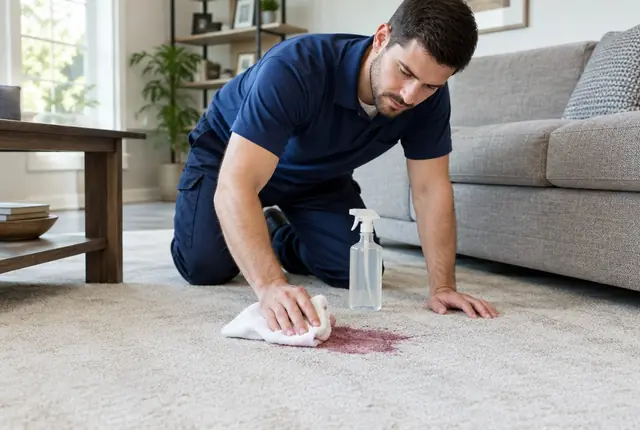
To clean a carpet stain, blot up as much as you can with a white cloth, test your cleaner in a hidden spot, then apply a mild solution with a cloth and blot from the outside in. Start with 1/4 teaspoon of clear dish detergent in a cup of lukewarm water, rinse with water, and dry the spot under a weighted stack of towels. Grease, ink and gum need a solvent first.
Spills are the most common reason people call us for carpet cleaning in Warren and Youngstown homes, and usually someone has already scrubbed the spot with whatever was under the sink. This guide follows the spot cleaning steps from the Carpet and Rug Institute (CRI), the carpet industry's trade group, plus care guides from Shaw Floors and Mohawk.
What Is the Right Way to Clean Carpet Stains?
Act fast, blot, and use the mildest solution that works. The CRI's Spot Solver says delaying "may cause the spill to become a permanent stain." Blot liquids with a dry, white cloth or white paper towels, scrape up semi-solids with a rounded spoon, and break up dry solids and vacuum them before you add any liquid at all.
Shaw Floors' carpet care guide boils it down to five verbs: scrape, absorb, blot, rinse and weight. It warns to "always blot; never rub or scrub abrasively, as a fuzzy area may result," and to work from the outer edge of the spot toward the center so you don't spread the spill. No carpet is stain proof. Shaw says many are stain resistant, which mainly buys you time to get the spill out.
Before You Start: Test First and Gather Supplies
Every CRI stain entry starts with the same rule: pretest any spot removal solution in an inconspicuous area, such as inside a closet or under a couch, and check for color transfer to the cloth or damage to the carpet. "If a change occurs, select another solution."
- White cotton cloths or plain white paper towels, plenty of them
- Clear liquid dish detergent (no bleach, no lotion). The CRI mix is 1/4 teaspoon per 1 cup of lukewarm water. "Never use a stronger concentration."
- White vinegar solution: 1 cup of white vinegar to 2 cups of water (CRI)
- Household ammonia solution: 1 tablespoon of ammonia per cup of water. The CRI warns it can change carpet color, so test it.
- A dry cleaning solvent sold for spot removal from clothing, for grease, ink and gum
- A spray bottle of plain water for rinsing (lukewarm to rinse out detergent, cold for the final rinse and for blood), a spoon or dull knife, and a heavy object that won't transfer color, like a plastic jug of water
Two products never go in the bucket. The CRI says laundry detergent can contain optical brighteners that dye the fiber, and automatic dishwasher detergent often contains bleaching agents.
How Do You Clean Carpet Stains Step by Step?
Put a small amount of solution on a white cloth, not straight on the carpet, and work it in gently from the edges toward the center. Let it sit a few minutes, then blot. The CRI says to keep using the first solution as long as the stain keeps transferring to the cloth, and only then move to the next one on the list.
- Remove what you can. Scrape solids with a spoon, blot liquids until the towel comes up nearly dry.
- Test your first solution in a hidden spot.
- Apply it with a cloth, edges to center. Let it sit a few minutes, then blot. Don't rub.
- Repeat while the stain is still moving onto the cloth. When it stops, switch to the next solution for that stain.
- Rinse. The CRI says to rinse with cold water when the spill is gone, and to mist rather than pour to avoid overwetting.
- Dry it under weight. Stack several layers of white towels on the spot and set a heavy, colorfast object on top (Shaw Floors). Change the towels until they come up dry.
Don't skip the rinse. Shaw's guide says detergent residue left in the carpet "may become sticky and cause rapid resoiling," and the CRI says several rinses are often needed to get residue out. If you use more than one procedure, Shaw says to let the carpet dry in between.
The most common "stain" we're called about isn't the original spill. It's a gray ring around where the spill used to be, made of soap that never got rinsed out and grabbed every bit of dirt that walked across it. If your spot looked great the day you cleaned it and dark two weeks later, that's residue, and more soap makes it worse. Plain water rinses and blotting usually fix it.
Carpet Stain Removal Chart: Seven Common Stains
The CRI's Spot Solver lists an order of solutions for each stain, and you work down the list until the stain is gone. Shaw's chart assigns its own procedures. Here's how the two line up for the stains we see most.
| Stain | CRI Spot Solver order | Shaw Floors procedure | Watch out for |
|---|---|---|---|
| Red wine | Detergent solution, vinegar solution, warm water, spot removal kit, ammonia solution, call a professional | Detergent and rinse, then hydrogen peroxide/ammonia mix if needed | Red dye sets fast. Blot right away and don't rub. |
| Coffee | Detergent solution, vinegar solution, warm water, spot removal kit, call a professional | Detergent, then hydrogen peroxide/ammonia mix if needed | Rinse well so sugar and cream don't stay sticky. |
| Grease (food) | Nail polish remover, solvent, detergent solution, vinegar solution, warm water, spot kit, ammonia, call a professional | Solvent on a cloth, then detergent and rinse | Never pour solvent onto carpet. It can damage the latex that holds the backing together. |
| Mud | Detergent solution, warm water, call a professional | Let it dry, vacuum, tap with a brush, vacuum again, then detergent | Wet mud smears. Let it dry first. |
| Blood | Detergent solution, spot removal kit, ammonia solution, call a professional | Detergent, then hydrogen peroxide/ammonia mix if needed | Rinse with cold water only, never warm or hot. |
| Ballpoint ink | Nail polish remover, solvent, detergent solution, vinegar, warm water, spot kit, ammonia, call a professional | Solvent on a cloth, then detergent and rinse | Blot, don't rub, or the ink spreads into a bigger mark. |
| Chewing gum | Solvent, call a professional | Freeze with ice, shatter, remove the chips, then solvent | Pick the chips out before they soften. |
Permanent ink is the outlier. The CRI's entry for permanent ink puts "call a professional" at the top of its list, which tells you how often home methods fail on it.
How Do You Get Red Wine and Coffee Out of Carpet?
Blot until the towel comes up nearly dry, then apply the CRI detergent solution with a cloth, let it sit a few minutes and blot. If color is still lifting, keep going. If it stops, move to the vinegar solution, then rinse with water. Both stains are dye-heavy, so speed matters more than the product you pick.
For a stubborn wine or coffee spot, Shaw's Procedure M adds a stronger step. Mix 1/2 cup of 3% hydrogen peroxide with 1 teaspoon of clear, unscented household ammonia, use it within two hours, and let it stand on the spot for 2 to 3 hours under a weighted sheet of plastic wrap. Repeat and let it dry until the stain is gone, then apply white vinegar and rinse with water.
This is the step where the hidden-spot test matters most. And never add bleach to anything on the same spot. The New Jersey Department of Health warns that bleach mixed with ammonia creates toxic chloramine gas.
A trick from our crew for wine: keep a stack of white paper towels and a gallon jug of water by the couch on party nights. Fold a towel over the spill, set the jug on it and walk away for five minutes. The weight pulls out far more wine than frantic blotting does, and it keeps you from rubbing.
How Do You Remove Grease, Ink and Gum From Carpet?
Grease, ink and gum don't dissolve in water, so they need a dry cleaning solvent before any detergent. Put the solvent on a white cloth, never directly on the carpet, and blot. Follow with detergent and a rinse. Freeze gum hard with ice first and chip it off.
The CRI recommends a non-flammable spot remover or dry cleaning type solvent sold for clothing and says to exercise caution. Pouring solvent onto carpet or letting it reach the backing can damage the latex that holds the primary and secondary backings together. That's how a grease spot turns into a soft, loose patch.
For gum, Shaw's Procedure G says to freeze it with ice cubes, shatter it with the back of a spoon and remove the chips before they melt, then use solvent for whatever is left (Procedure A).
Mud and Blood: Let One Dry, Rinse the Other Cold
Mud is the one stain you should leave alone for a while. Shaw lists dried mud under Procedure P: vacuum as much as possible, loosen the rest by tapping with a scrub brush or toothbrush (tap, don't scrub), vacuum again, then use the detergent solution and rinse.
Blood is the opposite. Get to it while it is fresh. The CRI order for blood is the detergent solution, a spot removal kit, then the ammonia solution, with a professional as the last step, and the CRI's final rinse is cold water. Shaw adds its hydrogen peroxide/ammonia mix for spots that stay.
On blood we stick to cold water for the rinse, and we keep hot water and steam away until the spot is out. Heat sets protein stains. In Valley winters we also see a lot of mud mixed with road salt in entryways, which leaves a white crust once it dries. Vacuuming that crust first, before any liquid, makes the cleanup much shorter.
Why Do Carpet Stains Come Back After Cleaning?
A stain that reappears after drying usually came from below. When you soak a spot, the spill that reached the backing wicks back up to the tips of the fibers as it dries. Too much solution and soap residue that attracts dirt cause most repeat stains. Use small amounts, rinse well and dry under weight.
The CRI's advice is plain: "More is not better." Apply sparingly, mist your rinse water instead of pouring it, and blot after each rinse. If a spot keeps returning, stop adding product. A professional extraction pulls the spill and the residue up from the base of the fibers.
Spills that reached the pad, like pet accidents, are a different problem. Our guide on how to get pet urine out of carpet covers enzyme cleaners and when the pad needs replacing.
What Can Void Your Carpet Warranty?
Harsh household chemicals, non-approved cleaning products and skipping required professional cleanings. Shaw warns that non-approved products and treatments, whether applied by you or by a pro, may cause damage that its warranty won't cover. Mohawk's 2009 EverStrand warranty guide required at least one professional cleaning every 18 months, with proof.
| What to avoid | Why | Source |
|---|---|---|
| Bleach, tile cleaners, mildew removers, oven cleaners, drain openers, pesticides, some plant foods | Strong chemicals that can discolor or dissolve carpet fibers | Shaw Floors |
| Acne creams with benzoyl peroxide | A powerful bleach that can permanently damage carpet and most fabrics | Shaw Floors |
| Household cleaners not certified by the CRI Seal of Approval program | Shaw says many household products contain chemicals that may permanently damage carpet | Shaw Floors |
| Laundry and automatic dishwasher detergent | Optical brighteners and bleaching agents dye or destroy fibers | CRI |
| Going more than 18 months without professional cleaning | Mohawk's 2009 guide required it, using CRI Seal of Approval products, and a bill or invoice as proof | Mohawk warranty and care guide (2009) |
Read the stain warranty closely too. The Mohawk guide excludes color changes from grease, mud, ink, blood, bleach, acne medications, urine and several other spills from its stain coverage, so those stains are on you. The CRI says certified cleaners are "recommended and sometimes required by the manufacturer," and lists them on its website. Shaw highly recommends periodic professional cleaning and says carpet should be properly cleaned at least once every 24 months. For a schedule by household, see how often carpet should be cleaned.
When to Call a Pro
Call a professional when a stain stops transferring to the cloth and is still visible, when it keeps coming back after it dries, when the spill is large, or when it is permanent ink. The CRI lists "call a professional" as the last step for every stain above, and Mohawk says abnormally large stains may require hot water extraction.
Phillips Care Cleaning has cleaned homes and businesses across Trumbull and Mahoning County since 2012. We start with a free walk-through, look at the stains with you, tell you plainly what's likely to come out, and give you a written quote. Stains on an Oriental or wool rug go to our area rug cleaning crew, and offices with coffee trails in the hallway are covered by commercial carpet cleaning. Curious about price first? See carpet cleaning cost in Warren, Ohio, then call (330) 219-7916 or request your walk-through.
Sources
- Carpet and Rug Institute, Spot Solver, retrieved 2026-10-16
- Carpet and Rug Institute, Spot Solver: Wine (updated Apr 5, 2023), retrieved 2026-10-16
- Carpet and Rug Institute, Spot Solver: Chewing Gum (updated Apr 4, 2023), retrieved 2026-10-16
- Carpet and Rug Institute, Spot Solver: Ink, Ball Point, retrieved 2026-10-16
- Carpet and Rug Institute, Cleaning and Maintenance, retrieved 2026-10-16
- Shaw Floors, Carpet Care and Maintenance, retrieved 2026-10-16
- Mohawk / Lowe's, EverStrand Warranty and Care Guide (2009), retrieved 2026-10-16
- New Jersey Department of Health, Hazard Alert: Mixing Cleaners, retrieved 2026-10-16
Frequently asked questions
Carpet Stains questions, answered.
A free walk-through is the best way to plan your cleaning. These are the questions we hear most from Valley homeowners.
What is the best homemade carpet stain remover?
The Carpet and Rug Institute's basic mix is 1/4 teaspoon of clear liquid dish detergent in 1 cup of lukewarm water, and it says never to make it stronger. Apply it with a white cloth, blot from the edges in, then rinse with plain water so no soap stays behind. Test it in a hidden spot first, and never use laundry or automatic dishwasher detergent.
Can you get old, set-in stains out of carpet?
Sometimes. Rewet the spot with the CRI detergent solution and work through the same steps with more patience, since the CRI says complete removal may take several repeats. For dye-based stains like coffee and wine, Shaw Floors adds a hydrogen peroxide and ammonia mix left for 2 to 3 hours under plastic wrap. Some old stains have changed the carpet's color, and no cleaning brings that back.
Can I spray vinegar on my carpet to clean it?
Vinegar works as a rinse step, not a main cleaner. The CRI uses 1 cup of white vinegar in 2 cups of water, mostly to neutralize detergent or alkaline spills, and Shaw applies vinegar only after a stain is gone. Spray lightly, blot and finish with plain water. For pet accidents, an enzyme cleaner is the better choice because vinegar can draw pets back to the spot.
Should I use hot or cold water on carpet stains?
Use lukewarm water for the detergent mix and for rinsing out soap residue, as the CRI recommends, then a cold water final rinse once the spill is out. For blood and other protein stains, rinse with cold water only. Avoid hot water and steam on protein stains like blood or urine, because heat can set them into the fiber.
Will a stain remover void my carpet warranty?
It can. Shaw Floors warns that non-approved cleaning products, applied by you or a professional, may cause damage its warranty will not cover, and says not to use household cleaners outside the CRI Seal of Approval program. Mohawk's 2009 EverStrand warranty guide required a professional cleaning at least every 18 months with proof. Check your own warranty and choose CRI certified spot removers.
Why does a carpet stain come back after it dries?
Usually because the spill reached the base of the fibers or the backing and wicked back up as the carpet dried, or because soap residue was left behind and attracted dirt. The CRI warns that many spot solutions leave residue and that more is not better. Use small amounts, rinse several times, dry under weighted towels, or have the spot professionally extracted.
Related services
More from the same crew
Carpet Cleaning
Deep carpet cleaning that lifts traffic lanes, pet stains and odors from the carpet in your home.
Explore serviceArea Rug Cleaning
Area rugs cleaned with care for the fibers and dyes, spots and pet accidents treated.
Explore serviceUpholstery Cleaning
Couches, sofas, chairs and mattresses deep cleaned in your home, stains and odors pulled out.
Explore serviceRequest a free quote
One walk-through, one written price, one number to call: (330) 219-7916.
Start the conversation